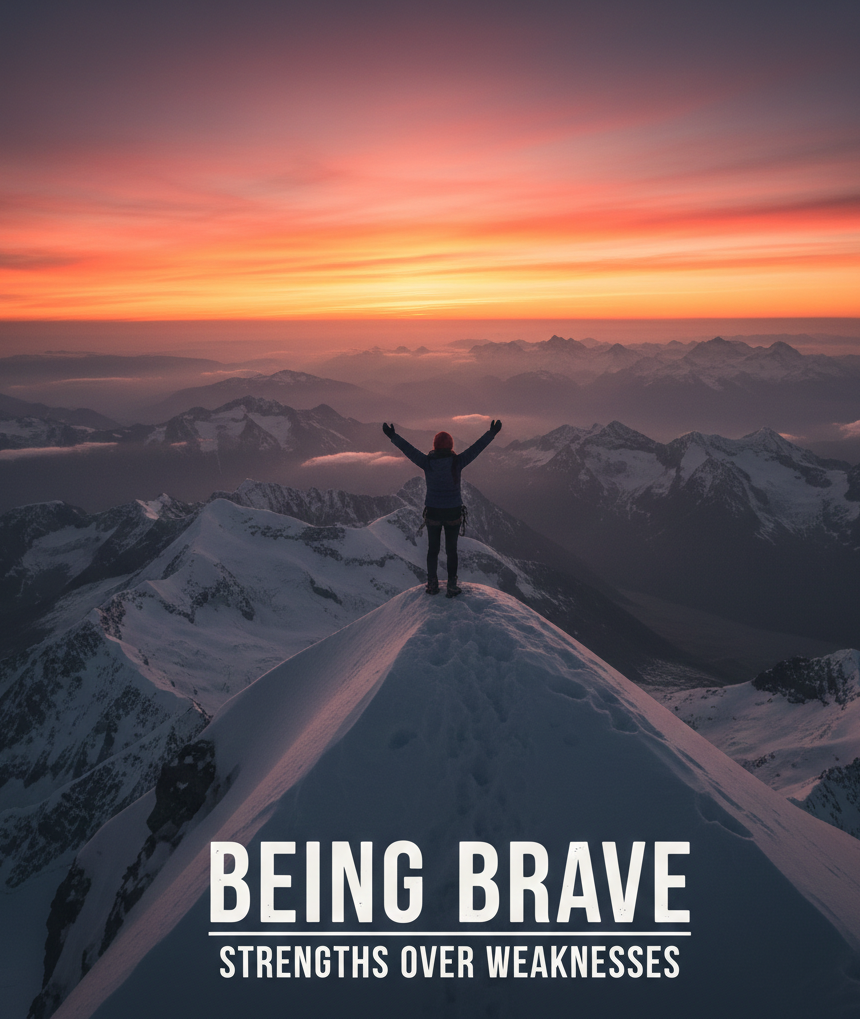
Being Brave; Strengths over Weaknesses
This blog is about identifying our strengths and leaning into them versus focusing on weaknesses to improve. We all have unique qualities and strengths. What if we focused our time and energy on expanding our natural gifts than improving our weaknesses?
I was inspired to write this blog after reading one of Ina Garten’s books, listening to a Will Ferrel interview, and watching the We Are the World music video documentary.
I highly recommend Ina Garten’s book, Be Ready When the Luck Happens. Ina is known as The Barefoot Contessa, and I love watching her cooking shows. She is so personable you feel like you are right there in her kitchen with her. In this book, In a shared her struggles with self-esteem stemming from a difficult childhood. She shares how she grew into her confidence, talents, and trusting her instincts to lean into a career doing what she loves with the encouragement of a strong support network, especially her husband.
Recently I came across a Will Ferrell interview discussing his early comedic career days. He shared a story of when he first joined the Saturday Night Live cast, he was also filming or had filmed movies such as Old School, Anchorman, and Elf. At that time, he was not confident the movies, which now have become iconic, would be picked up by producers or even released. Although Will has become an entertainment superstar, he reflected that he flubbed his very first line on SNL on live television. It is crazy to me
that he has achieved so much success, he still clearly remembers that one mistake on SNL.
In the We Are the World The Greatest Night in Pop documentary, music icons such as Lionel Riche, Huey Lewis, and Cyndi Lauper were interviewed about the event. The artists recalled as much as they were honored to be part of the project, the pressure to perform solos, while being also being filmed for the music video, was immense with so
many successful artists in the same room.
Hearing that these talented people who are now household names struggle with imposter syndrome, making mistakes, self-confidence, and their perceived weaknesses is something many of us can relate to. I especially often hear this from women who doubt and downplay their gifts or constantly compare themselves to others.
Thinking of my own childhood, report card time was stressful. No matter how much we may have excelled in some areas, any subjects that showed marks of average or needs improvement were scrutinized. Growing up, the focus was traditionally on our weaknesses and what we could do better, not necessarily our strengths. I realize that
constructive criticism can be helpful but, ultimately, no one is talented at everything. We all have different strengths that make us unique. Our strengths and talents should
appreciated, celebrated, and shared.
If you have not read the Gallup StrengthsFinder book or taken the assessment, this is a tool used to identify and analyze your strengths by answering a series of questions. For
example, of the 34 possible themes, my top five are Intellection, Discipline, Empathy, Learner, and Focus. A friend of mine and fellow consultant is certified in Gallup Assessments to use when coaching her clients. I asked her thoughts about how early strengths start appearing. She said strengths can begin showing as early as elementary
school ages. While strengths and talents can start to shine in many ways, Gallup does offer a survey instrument called Strengths Explorer for children between 10-14 that will identify the top 3 out of 10 talents.
So, I was curious. Knowing my strengths through the Gallup StrengthsFinder as an adult, would my school report cards, transcripts, and possibly job evaluations show these same themes? What areas or subjects did I excel in? What comments did my
teachers say about my skills? How does that feedback line up with my known strengths as an adult?
My earliest report cards showed I always earned great grades in Reading, English, Social Studies, Spelling, Science and Art (subjects that still are intriguing to me today). The teachers’ comments were also interesting--I daydreamed often (I love brainstorming sessions and visualization exercises) and was okay in proofing my work (spelling errors annoy me). Other comments as I got older were that although I could
focus well on topics and special projects that interested me (I still love a balance of routine and special project work), I put too much pressure on myself and was afraid making mistakes. I worked well independently and with others, was imaginative and
creative, but struggled with self-confidence and self-esteem.
In high school and college, I had earned several scholarships and awards for outstanding new member, achievement, loyalty, and leadership in the groups and teams I was part of. In a 1998 DISC profile through my work, I was a high S for Steadiness-cooperating with others to carry out tasks and C for Conscientiousness-working within circumstances to ensure quality and accuracy. I ranked lower in D for Dominance and I for Influence. The recommendations for my managers were that I would work best in an environment where I knew expectations, had documented procedures, was aware of how I would be evaluated so I could ensure I met my goals, but also have the ability to
contribute to creative problem solving.
Wow…. Spot. On. I can see how my strengths have stayed consistent or even developed more as I have gotten older. When I reflect on what motivates me, I always need a goal to work toward--either a milestone, mission, or an incentive. I am not necessarily motivated by recognition but want to be considered a leader with my
actions. I am still observant, want to be transparent about goals and expectations, and strive to be diplomatic. I like dealing with facts, processes, and documentation, although as I get older, I am learning to lean into my intuition much more. I love to learn and although I appreciate understanding expectations, I also like to know where I can be creative and add my own stamp to my work. I like being able to use a combination of imagination, creativity, and my experience to solve problems.
My call to action with this blog is to challenge yourself, family and friends to recognize and overcome imposter syndrome. Don’t dwell on or overthink mistakes. Making mistakes is how we learn. Strive to just do the best you can with what resources and knowledge you have at the time. Don’t compare yourself to someone else who does not
have your story and experiences. Think about the skills you do have, the things you like to do, and the things that you may think are so easy to see or understand that everyone must see things the same way. I guarantee most people do not so sharing your
perspective can be important and insightful. Pick up the StrengthsFinder book and take the assessment to identify your top talent themes—and then take this idea of strengths
farther. When you see someone excel at something, recognize and compliment those strengths. If you have children or are around children, share your observations or even
memories of where they have shown their talents and strengths. When you are faced with a challenge in an area that you are not as strong in, its ok to ask for help. Tap into each other’s talents and share your strengths.
Go be brave.
I was inspired to write this blog after reading one of Ina Garten’s books, listening to a Will Ferrel interview, and watching the We Are the World music video documentary.
I highly recommend Ina Garten’s book, Be Ready When the Luck Happens. Ina is known as The Barefoot Contessa, and I love watching her cooking shows. She is so personable you feel like you are right there in her kitchen with her. In this book, In a shared her struggles with self-esteem stemming from a difficult childhood. She shares how she grew into her confidence, talents, and trusting her instincts to lean into a career doing what she loves with the encouragement of a strong support network, especially her husband.
Recently I came across a Will Ferrell interview discussing his early comedic career days. He shared a story of when he first joined the Saturday Night Live cast, he was also filming or had filmed movies such as Old School, Anchorman, and Elf. At that time, he was not confident the movies, which now have become iconic, would be picked up by producers or even released. Although Will has become an entertainment superstar, he reflected that he flubbed his very first line on SNL on live television. It is crazy to me
that he has achieved so much success, he still clearly remembers that one mistake on SNL.
In the We Are the World The Greatest Night in Pop documentary, music icons such as Lionel Riche, Huey Lewis, and Cyndi Lauper were interviewed about the event. The artists recalled as much as they were honored to be part of the project, the pressure to perform solos, while being also being filmed for the music video, was immense with so
many successful artists in the same room.
Hearing that these talented people who are now household names struggle with imposter syndrome, making mistakes, self-confidence, and their perceived weaknesses is something many of us can relate to. I especially often hear this from women who doubt and downplay their gifts or constantly compare themselves to others.
Thinking of my own childhood, report card time was stressful. No matter how much we may have excelled in some areas, any subjects that showed marks of average or needs improvement were scrutinized. Growing up, the focus was traditionally on our weaknesses and what we could do better, not necessarily our strengths. I realize that
constructive criticism can be helpful but, ultimately, no one is talented at everything. We all have different strengths that make us unique. Our strengths and talents should
appreciated, celebrated, and shared.
If you have not read the Gallup StrengthsFinder book or taken the assessment, this is a tool used to identify and analyze your strengths by answering a series of questions. For
example, of the 34 possible themes, my top five are Intellection, Discipline, Empathy, Learner, and Focus. A friend of mine and fellow consultant is certified in Gallup Assessments to use when coaching her clients. I asked her thoughts about how early strengths start appearing. She said strengths can begin showing as early as elementary
school ages. While strengths and talents can start to shine in many ways, Gallup does offer a survey instrument called Strengths Explorer for children between 10-14 that will identify the top 3 out of 10 talents.
So, I was curious. Knowing my strengths through the Gallup StrengthsFinder as an adult, would my school report cards, transcripts, and possibly job evaluations show these same themes? What areas or subjects did I excel in? What comments did my
teachers say about my skills? How does that feedback line up with my known strengths as an adult?
My earliest report cards showed I always earned great grades in Reading, English, Social Studies, Spelling, Science and Art (subjects that still are intriguing to me today). The teachers’ comments were also interesting--I daydreamed often (I love brainstorming sessions and visualization exercises) and was okay in proofing my work (spelling errors annoy me). Other comments as I got older were that although I could
focus well on topics and special projects that interested me (I still love a balance of routine and special project work), I put too much pressure on myself and was afraid making mistakes. I worked well independently and with others, was imaginative and
creative, but struggled with self-confidence and self-esteem.
In high school and college, I had earned several scholarships and awards for outstanding new member, achievement, loyalty, and leadership in the groups and teams I was part of. In a 1998 DISC profile through my work, I was a high S for Steadiness-cooperating with others to carry out tasks and C for Conscientiousness-working within circumstances to ensure quality and accuracy. I ranked lower in D for Dominance and I for Influence. The recommendations for my managers were that I would work best in an environment where I knew expectations, had documented procedures, was aware of how I would be evaluated so I could ensure I met my goals, but also have the ability to
contribute to creative problem solving.
Wow…. Spot. On. I can see how my strengths have stayed consistent or even developed more as I have gotten older. When I reflect on what motivates me, I always need a goal to work toward--either a milestone, mission, or an incentive. I am not necessarily motivated by recognition but want to be considered a leader with my
actions. I am still observant, want to be transparent about goals and expectations, and strive to be diplomatic. I like dealing with facts, processes, and documentation, although as I get older, I am learning to lean into my intuition much more. I love to learn and although I appreciate understanding expectations, I also like to know where I can be creative and add my own stamp to my work. I like being able to use a combination of imagination, creativity, and my experience to solve problems.
My call to action with this blog is to challenge yourself, family and friends to recognize and overcome imposter syndrome. Don’t dwell on or overthink mistakes. Making mistakes is how we learn. Strive to just do the best you can with what resources and knowledge you have at the time. Don’t compare yourself to someone else who does not
have your story and experiences. Think about the skills you do have, the things you like to do, and the things that you may think are so easy to see or understand that everyone must see things the same way. I guarantee most people do not so sharing your
perspective can be important and insightful. Pick up the StrengthsFinder book and take the assessment to identify your top talent themes—and then take this idea of strengths
farther. When you see someone excel at something, recognize and compliment those strengths. If you have children or are around children, share your observations or even
memories of where they have shown their talents and strengths. When you are faced with a challenge in an area that you are not as strong in, its ok to ask for help. Tap into each other’s talents and share your strengths.
Go be brave.